Start three months out,
not the week you come home.
Every change you make before the baby arrives is a change your dog never has to associate with the baby. That is the whole strategy, and it is why timing matters more than technique.
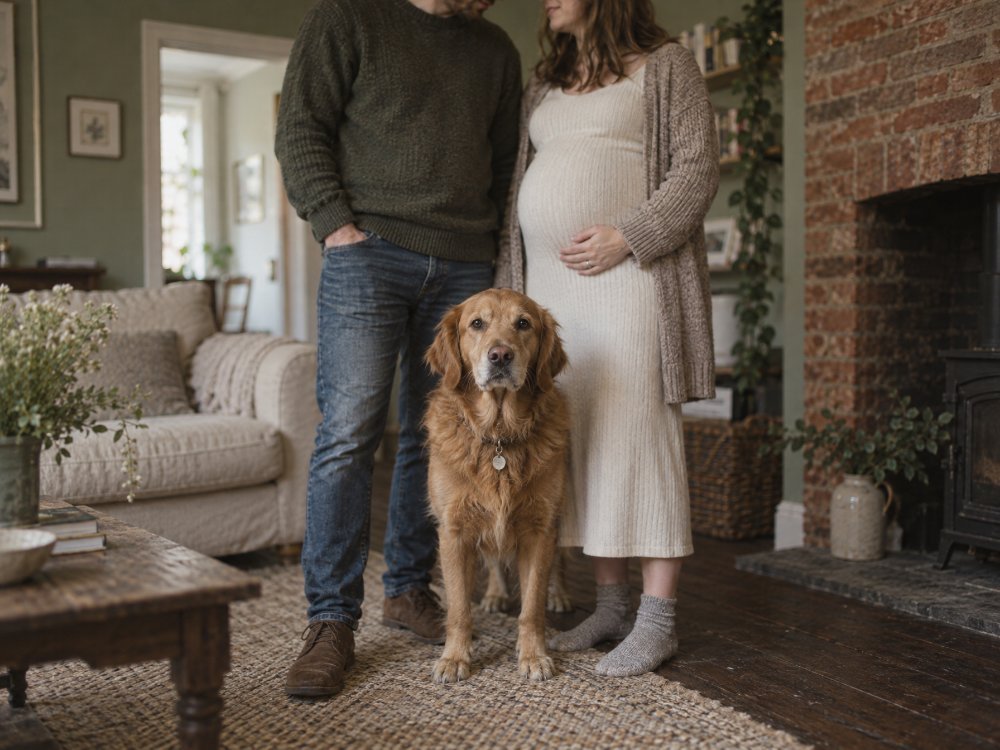
- ●Full vet check. A dog in pain has a shorter fuse, and arthritis is a genuine bite risk factor people miss.
- ●Update flea, tick and worm cover and keep it current. This protects the baby as much as the dog.
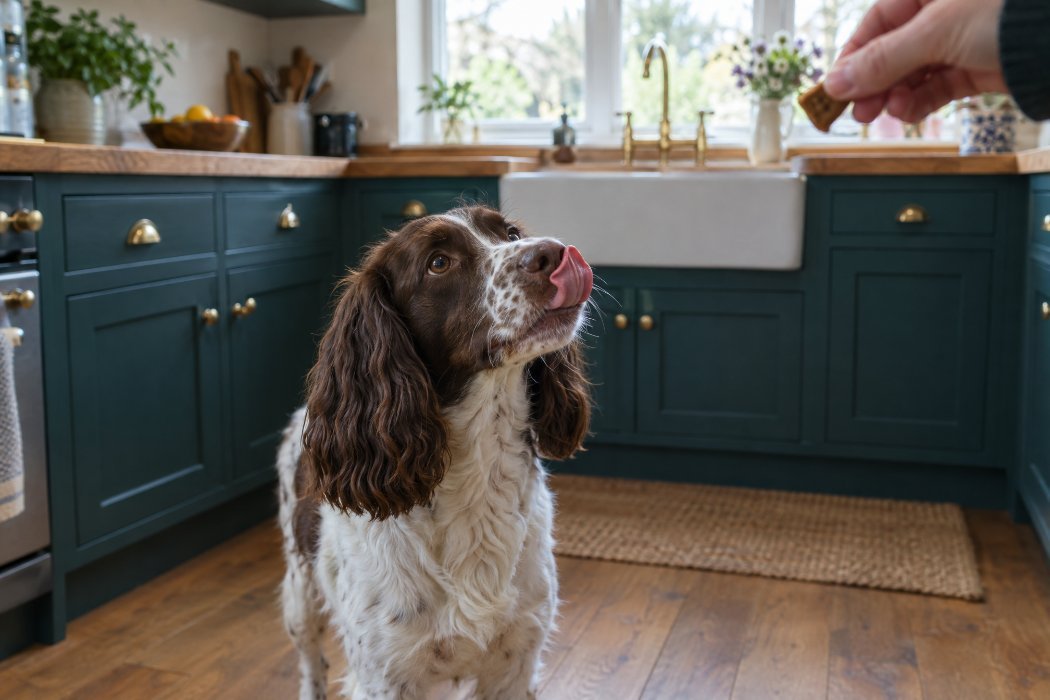
- ●Train what will actually be useful: a reliable settle on a mat, four paws on the floor, leaving items on cue. Impulse control, not tricks.
- ●Fix guarding now. If your dog guards food, toys or furniture, get professional help this month. It will not improve on its own and it is far harder with a newborn in the house.
- ●Make every furniture and room change now, so the move is not linked to the baby’s arrival.
- ●Fit the gates and let the dog get used to them. A gate beats a closed door — the dog can still see and hear you, which lowers anxiety instead of raising it.
- ●Assemble the pram and swing early and let the dog investigate them switched off, then running, with nothing dramatic happening.
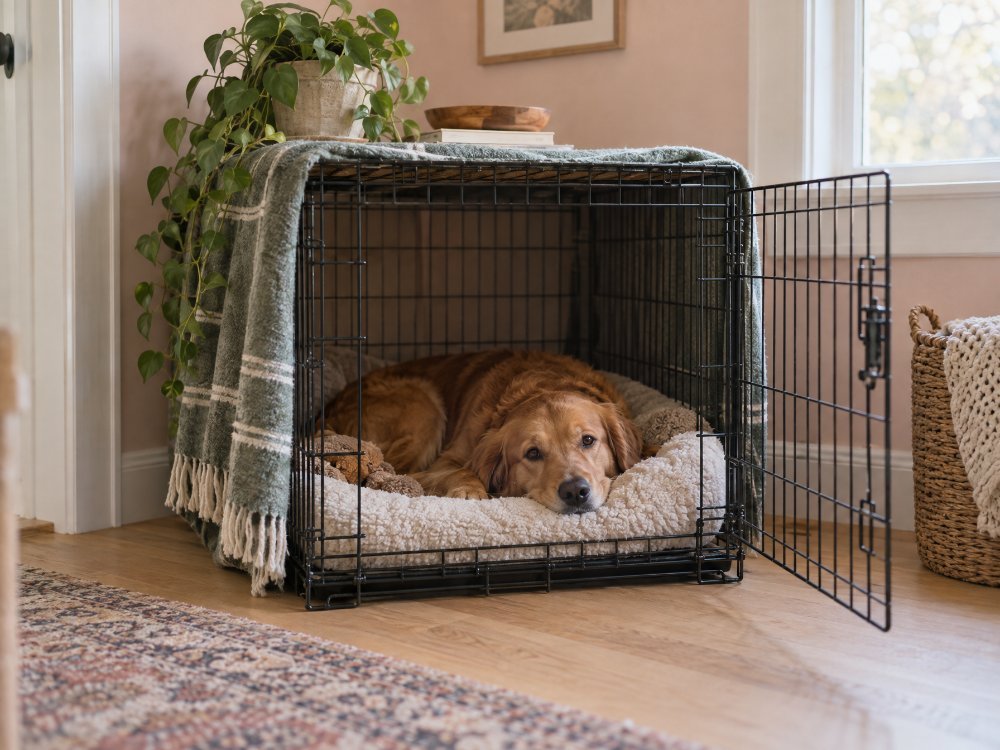
- ●Create one genuinely dog-only space that nobody ever disturbs. Later this will matter enormously.
- ●Play newborn crying at very low volume, paired with something good, building over weeks. Go back a step if the dog looks worried.
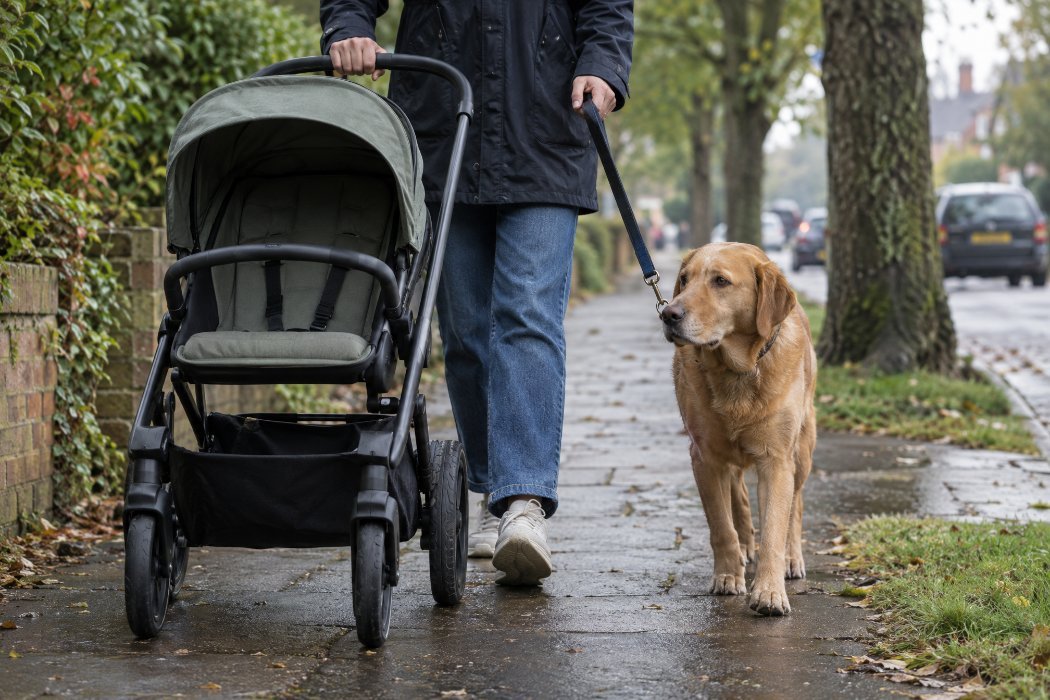
- ●Move to the new routine now — walks at the times they will actually happen, so the change is already old news.
- ●Use baby lotion and powder on yourself so the smell becomes ordinary.
- ●Arrange the hospital-stay cover. Whoever will care for the dog should visit and practise, not meet them on the day.
- ●Send a blanket home ahead of you so the baby’s smell arrives before the baby does.
- ●Greet the dog first, without the baby. Days of excitement and a first introduction do not belong in the same minute.
- ●Keep it brief, calm and on lead. Let the dog approach and withdraw freely. Never hold a baby down to a dog or a dog up to a baby.
- ●End early, while it is still going well. Several short, boring introductions beat one long, exciting one.
- ●Do not relax the rules. Three settled months usually means your baby has not moved yet, not that the risk has changed.
- ●Rehearse for mobility before it arrives. Rolling starts around four months, crawling from roughly six. To your dog, a baby who can move is a completely different animal: fast, unpredictable, at eye level, grabbing.
- ●Re-check the gates and the retreat. Every safe space needs an exit the dog can use without passing the child.
- ●Watch for drift. Stress signals that fade often mean the dog has stopped signalling, not that it is happier.
Pet-proofing the nursery
Barriers beat good intentions. A gate works when you are exhausted, ill or asleep — which is exactly when a rule you meant to follow does not.
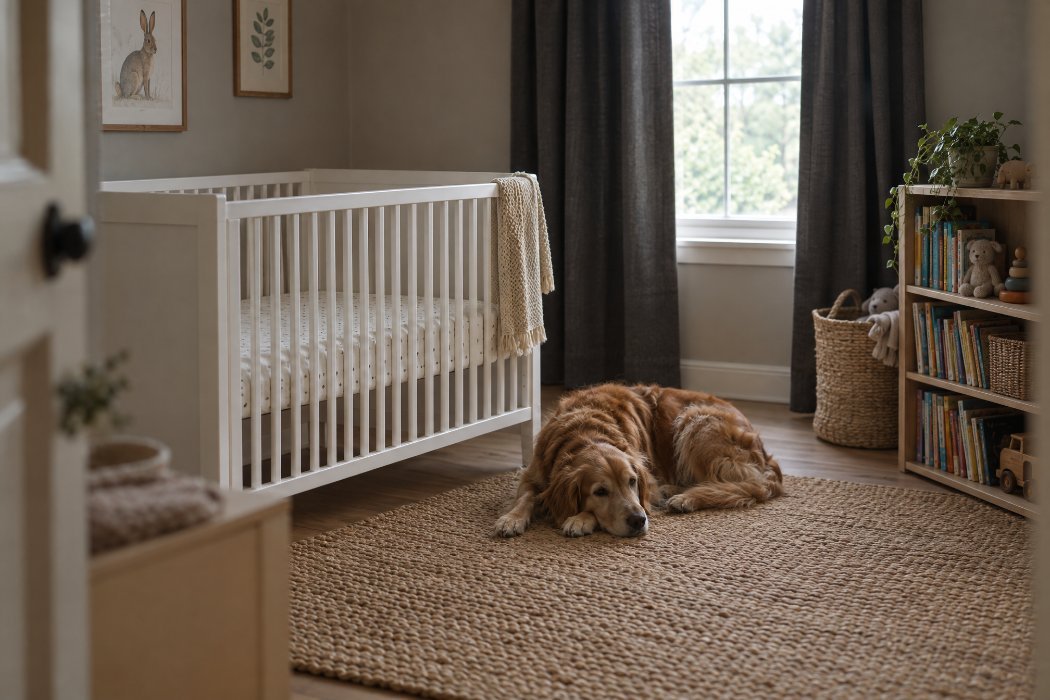
The nursery is off-limits
A hardware-mounted gate rather than a closed door, so the dog can still see and hear the household.
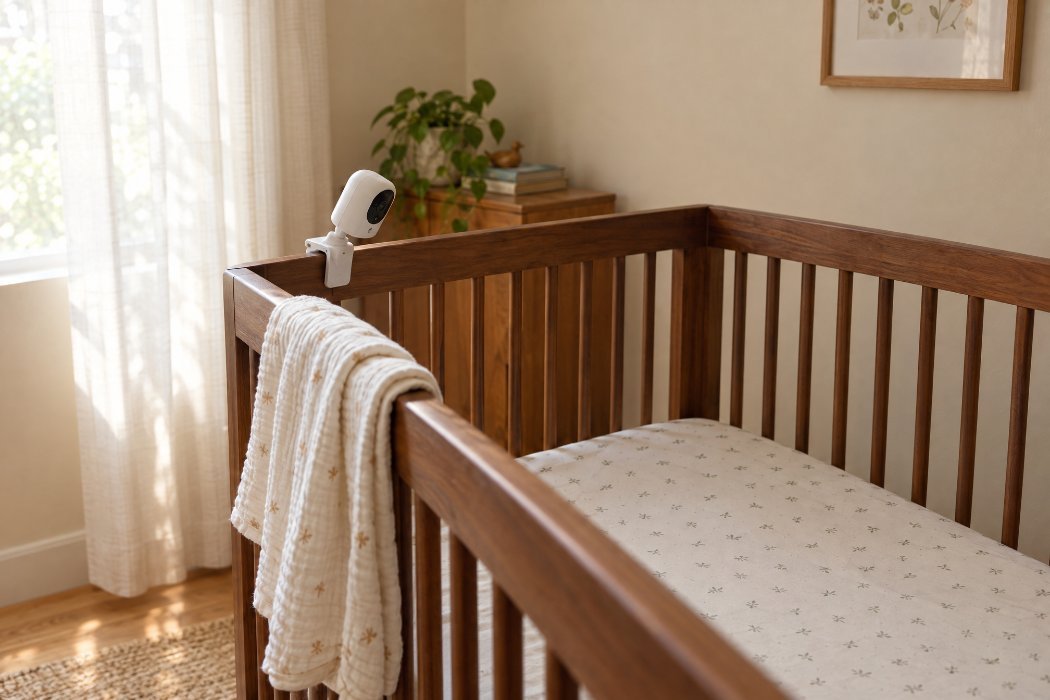
Nothing soft in the cot
Standard safe-sleep guidance that doubles as pet management: bare, firm, flat, no toys or loose bedding.
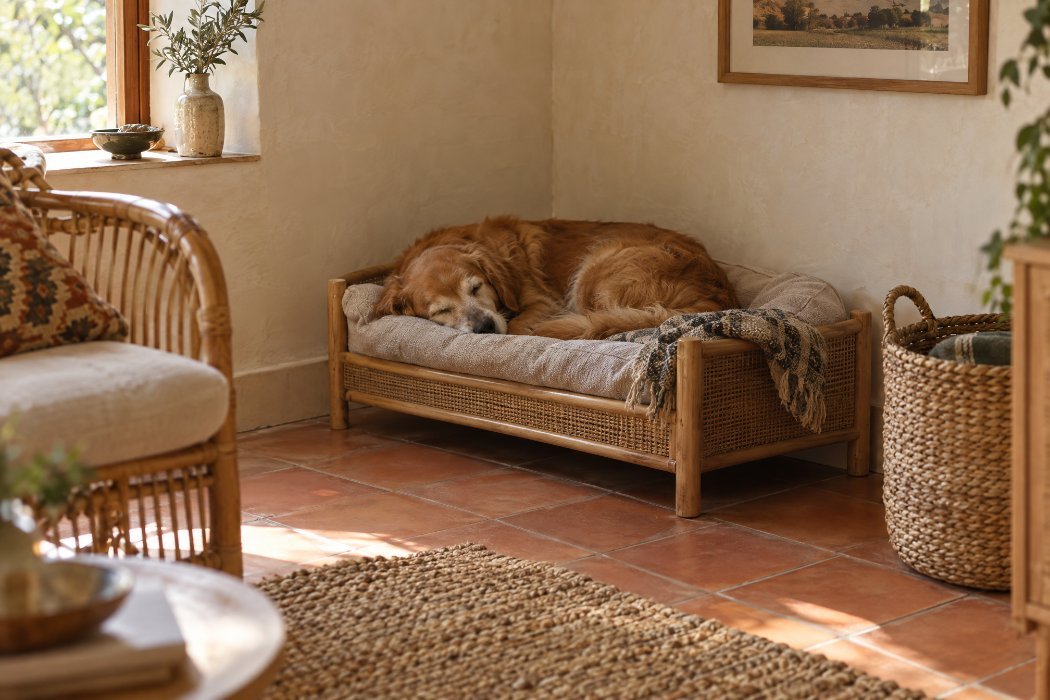
A retreat nobody disturbs
Somewhere the dog is genuinely left alone but can still see the household. Teach children early that it is never entered.
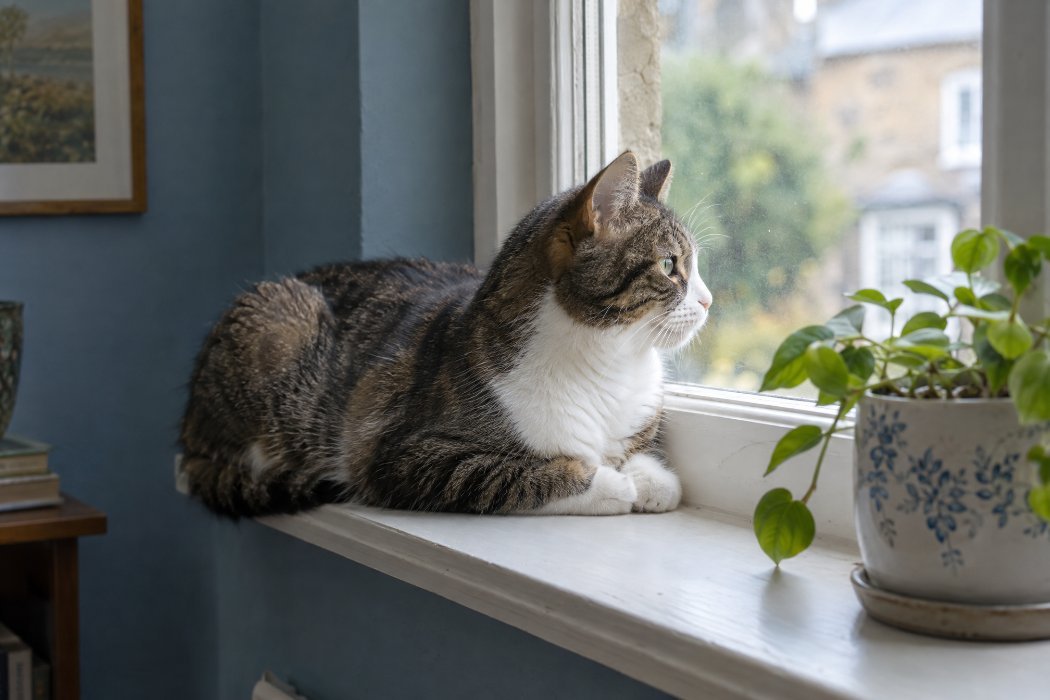
Cats: trays and cot nets
Toxoplasmosis can pass through cat faeces and matters in pregnancy — someone else should change the tray daily, or wear gloves. Cats seek warmth, so a cot needs a taut net.
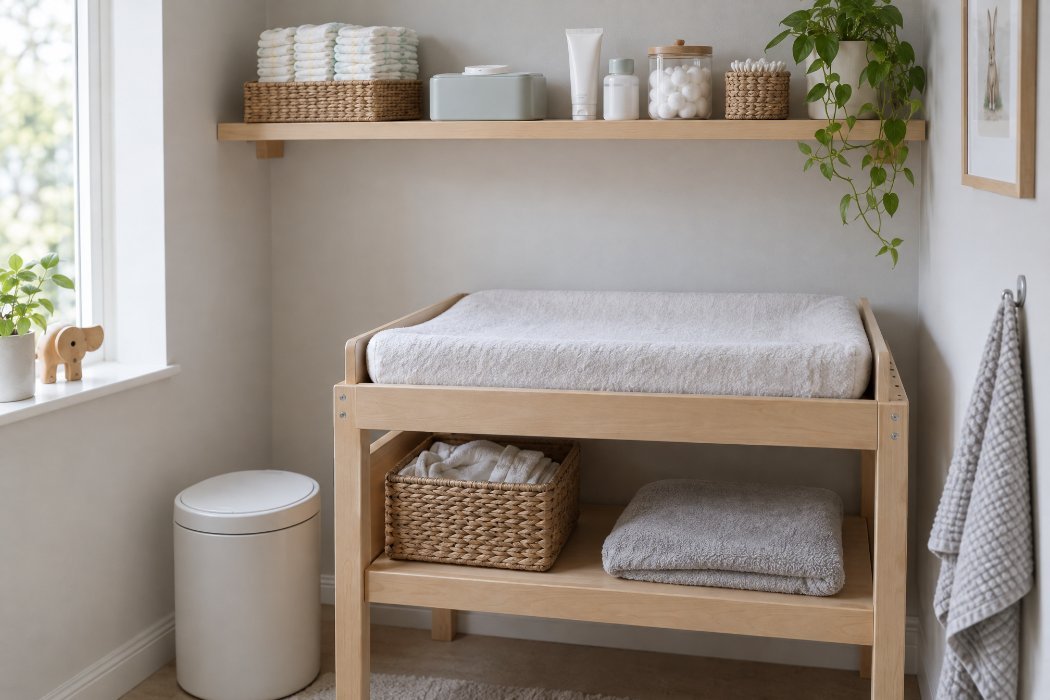
Changing supplies high up
Nappy bins are extremely interesting to dogs and the contents are a real hazard. Lidded, dog-proof, off the floor.
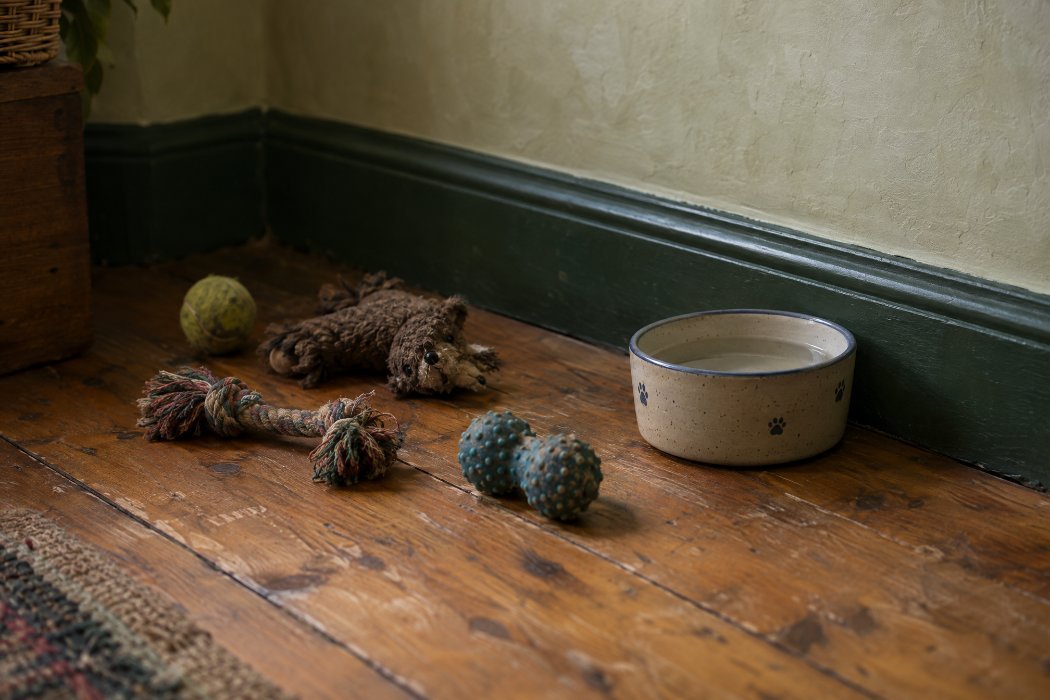
Separate the toy piles
Dog toys and baby toys look, smell and squeak alike. Different rooms entirely, and pick up promptly.
The rest of the house
The nursery gets the attention. Most of the day happens elsewhere.
The living room
Where most of the contact actually happens and where the fewest barriers exist. Decide now where the baby goes down and keep it consistent. Never leave a baby on a sofa, bed or changing mat with a dog in the room, even briefly.
Feeding areas
Feed the dog somewhere the baby will never be, behind a door where possible. Food is the commonest trigger for guarding, and a crawling baby heading for a bowl is the classic scenario. Stop free-feeding once the baby is mobile.
Stairs, hallways and the garden
Narrow spaces remove a dog’s ability to move away, and a large dog coming downstairs at speed takes a standing toddler with it. Outside, clear faeces daily rather than weekly — toxocariasis comes from roundworm eggs that need days to become infectious, so prompt clearing genuinely protects.
Learn to read the signals next.
Preparation buys you time. Reading your dog accurately is what you do with it.